
Epoxy Floors for Showrooms, Gyms and Retail Spaces
How long does epoxy installation and curing take?
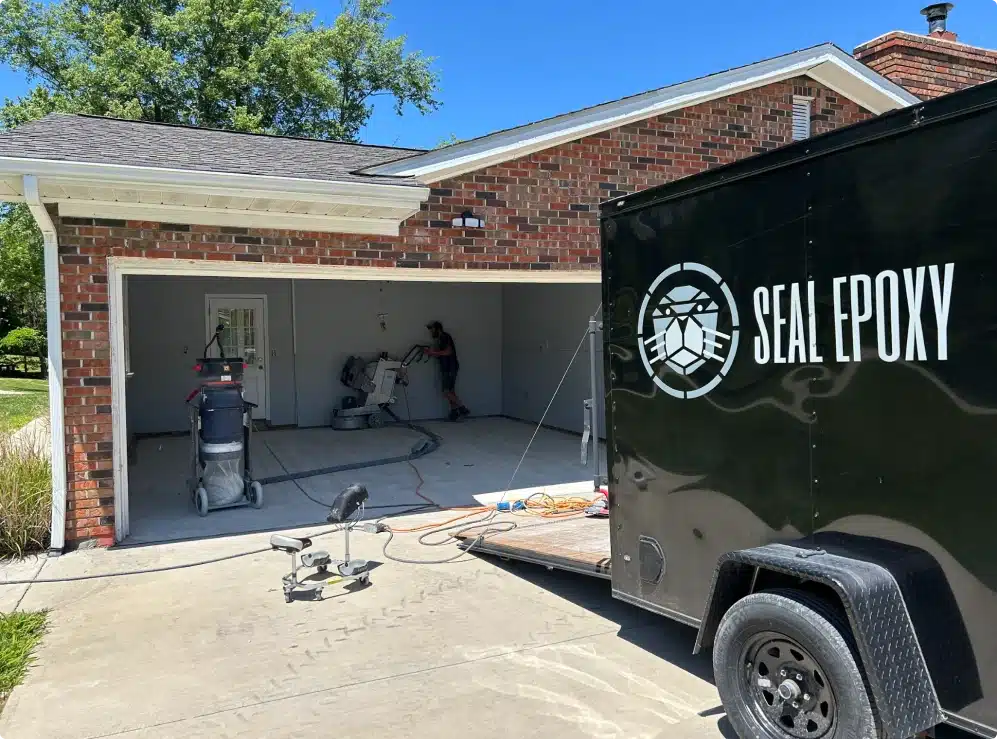
Understanding the Epoxy Floor Installation Timeline for St. Louis Homeowners
Timing is one of the first logistical concerns for St. Louis homeowners considering epoxy. You need to know how long the garage will be off-limits, when you can walk on the floor, and when vehicles can go back in. The timeline depends on the system used and the size of the space, but here’s what to expect for a typical residential garage.
Surface Prep: One Day
Most garage floors take a full day to prep properly. This includes:
Diamond grinding the concrete to remove contaminants and create a surface profile
Crack repairs
Thoroughly cleaning the slab
For basements or garages with extensive damage, the prep process might take longer.
Note: Prep generates dust and noise, so it’s important to plan accordingly. Seal Epoxy takes measures to contain the dust and coordinates timing with homeowners to minimize disruption.
Coating Application: One to Two Days
After prep, the base coat of epoxy is applied. The process includes:
Broadcasting decorative flakes while the epoxy is still wet
Allowing the floor to cure for several hours before applying the next layer
Most residential systems require at least one topcoat for durability and UV resistance.
Note: Depending on the complexity of the project (e.g., multiple colors, intricate designs, or additional texture), coating might stretch into a second day. The work itself doesn’t take two full days, but cure times between coats dictate the schedule.
Cure Times: Foot Traffic and Vehicle Traffic
Foot Traffic:
Light foot traffic is usually safe 24-48 hours after the final coat, depending on temperature and humidity.Full Cure:
Full cure—when you can park vehicles and use the space normally—takes 5-7 days for most high-solids epoxy systems.Polyaspartic Coatings:
Polyaspartic coatings cure faster, often allowing light use within hours and full use within 24-48 hours. This speed makes polyaspartic attractive for homeowners who can’t afford multi-day downtime.
Note: Temperature and humidity play a significant role in curing times. Cold weather slows curing, and high humidity can extend timelines. Seal Epoxy monitors conditions and adjusts schedules to ensure proper curing without cutting corners.
How Seal Epoxy Minimizes Downtime for St. Louis Families
Seal Epoxy works with homeowners to plan around vehicle needs and family schedules. If you need access to the garage daily, they can sometimes coordinate application during a planned trip or work around one side of a two-car garage at a time.
Transparent Timelines:
The team is upfront about timelines during the estimate so there are no surprises. You’ll know:When the work happens
When you can walk on the floor
When vehicles can return
Most St. Louis families find that a week of planning makes the installation process smooth. The result is a floor that lasts 10-15 years, making a few days of inconvenience worthwhile.
Faster-Curing Polyaspartic Options
If timeline is a major concern—maybe you can’t be without your garage for a week—Seal Epoxy can discuss faster-curing polyaspartic options during the consultation. You’ll see the trade-offs in cost and features so you can decide what fits your situation.
In-Home Assessments and Detailed Project Timelines
Seal Epoxy’s in-home assessments include a detailed project timeline so you can plan around work, family schedules, and St. Louis weather.
Tags :
Share This :
Have Any Question?
For more information about epoxy flooring systems for your garage or basement, feel free to reach out to us.