
Epoxy Floors for Showrooms, Gyms and Retail Spaces
What if my epoxy starts peeling or bubbling?
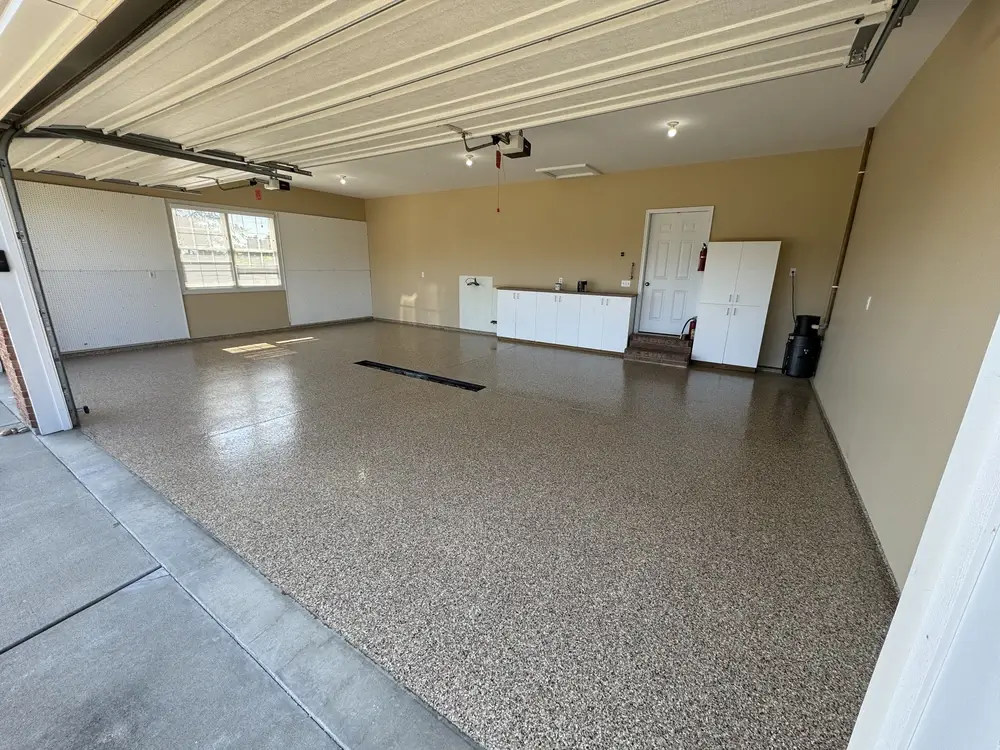
Understanding Epoxy Floor Peeling and Bubbling: Causes and Solutions
Peeling or bubbling is the most common sign that something went wrong with an epoxy installation. It’s frustrating to see a new floor fail, and it leaves St. Louis homeowners wondering what happened and whether it can be fixed. Here’s what causes these failures and how to address them.
Common Causes of Peeling and Bubbling
Moisture (The #1 Culprit)
Cause: If moisture vapor pressure under the slab is too high, it pushes the epoxy off from underneath, causing bubbles or entire sections to delaminate.
Common in: Basements or older garages without vapor barriers.
Poor Surface Prep
Cause: If the concrete wasn’t properly ground clean and profiler, the epoxy doesn’t have anything to grip.
Result: The floor may look fine initially, but weak adhesion leads to peeling, often starting at edges and spreading inward.
Contamination
Cause: Oil, old sealers, or other substances left on the slab prevent bonding.
Even if: The floor appeared clean, residual contamination can cause failure.
Wrong Products or Improper Application
Cause: Using DIY kits, applying coats too thick or too thin, or not following manufacturer cure times all contribute to bubbling and peeling.
Can a Failing Floor Be Repaired?
Localized Peeling
Possibility: If peeling is localized and the rest of the floor is solidly bonded, a spot repair might work.
Process: The damaged area is cut out, the concrete is re-prepped, and new epoxy is applied and blended.
Widespread Issues
Cause: Peeling or bubbling often points to a bigger issue, such as widespread moisture, contaminated concrete, or poor adhesion throughout the floor.
Solution: In these cases, patching won’t solve the issue. The floor needs to be stripped, the root cause addressed, and a proper system installed from scratch.
Note: Trying to recoat a peeling floor without fixing the underlying issue just delays the inevitable. The new coating will fail too.
How Seal Epoxy Assesses and Fixes Failing Floors
Seal Epoxy evaluates failing floors methodically:
Moisture Testing
The team tests for moisture levels to determine if it’s the cause of the failure.
Inspection of Adhesion
They inspect adhesion to determine whether the failure is localized or systemic.
Repair Recommendations
Based on the assessment, Seal Epoxy recommends either spot repair or full remediation.
Solutions
If moisture is the issue:
Seal Epoxy discusses solutions like mitigation primers, moisture-tolerant systems, or addressing the source of water intrusion.If it’s a prep failure:
The old coating is stripped, and the slab is ground correctly before reinstalling.
Working with Homeowners of Other Contractors’ Floors
Seal Epoxy also works with homeowners whose floors were installed by other contractors. If your floor is failing and you’re not getting answers from the original installer, Seal Epoxy provides honest, third-party evaluations and solutions.
Why Seal Epoxy Floors Don’t Fail This Way
Seal Epoxy handles proper prep and moisture testing upfront, ensuring their installations don’t fail in this way. For homeowners dealing with failing floors from previous work, the company offers remediation services across the St. Louis metro.
Get the Right Fix for Your Failing Epoxy Floor
If your epoxy floor is peeling, bubbling, or just not holding up, Seal Epoxy’s assessments identify why it’s happening and what needs to be done to fix it permanently. You’ll get a realistic evaluation and a plan that solves the problem instead of covering it up.
Tags :
Share This :
Have Any Question?
For more information about epoxy flooring systems for your garage or basement, feel free to reach out to us.