
Epoxy Floors for Showrooms, Gyms and Retail Spaces
Garage Floor Epoxy Guide for Homeowners
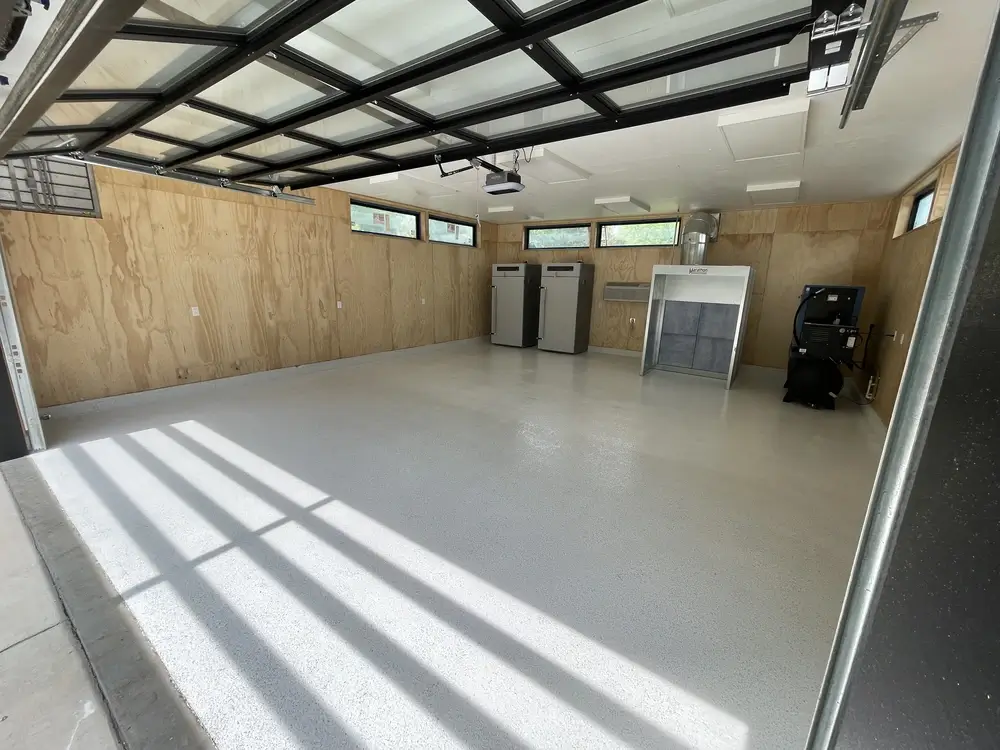
Garage floor epoxy can turn a dusty, stained concrete slab into a cleaner, more attractive part of your home. Whether your garage is mainly for parking, storage or weekend projects, the right coating can make the space easier to maintain.
However, a lasting result depends on more than the color you choose. Concrete preparation, moisture conditions, product selection and curing all affect how the floor performs.
This guide covers seven things to consider before installing an epoxy garage floor, from comparing quotes to caring for the finished surface.
1. Weigh the Benefits and Limitations
A garage floor coating provides a protective wearing surface over concrete. Depending on the selected system, it can offer easier cleaning, resistance to common spills and a finish that complements your home.
For Missouri homeowners, discuss exposure to road salt, wet vehicles, hot tires and workshop chemicals when choosing a system.
The main benefits include:
- Easier cleaning: a coated surface makes routine sweeping and spill cleanup simpler.
- A finished appearance: colors and decorative flakes can transform the look of bare concrete.
- Surface protection: a suitable system helps protect concrete from everyday wear and specified contaminants.
- Design flexibility: finishes range from simple solid colors to decorative patterns.
There are limitations, too. Coatings can scratch, smooth finishes can become slippery when wet, and cracks in the concrete may affect the surface above them. Installation also requires clearing the garage and allowing time before normal use resumes.
Choose a system based on how your garage works, as well as how you want it to look.
2. Understand What Drives Garage Floor Epoxy Cost
A useful quote explains what you are buying. The floor area matters, but preparation and the complete coating system can make a substantial difference.
Ask whether the price includes:
- Removing existing paint, sealers or coatings.
- Treating contamination and preparing the concrete.
- Repairs and appropriate treatment of joints.
- Moisture testing and any required mitigation.
- Primer, coating layers, decorative flakes and topcoat.
- Steps, edges or other additional surfaces.
- Cleanup and written warranty terms.
For example, a sound, uncoated slab may need less work than a similarly sized floor with peeling paint and damaged concrete.
Compare quotes for equivalent preparation and systems. A lower price may reflect a different scope, fewer layers or a different finish.
A site assessment is the best starting point for a reliable project price. Ask for the total installed cost and a clear explanation of any conditions that could change it.
3. Make Concrete Preparation a Priority
The coating needs a suitable surface to bond to. Painting over dirt, oil, weak concrete or an incompatible coating can undermine the installation.
Professional preparation commonly involves assessing moisture, removing unsuitable materials, mechanically profiling the concrete and cleaning away dust. Repairs must suit the slab and selected system.
Ask your installer:
- How will the concrete be prepared?
- Does the floor have contamination that needs treatment?
- Which cracks can be repaired, and which may continue moving?
- How will movement joints be handled?
- What moisture conditions can the proposed system tolerate?
Sherwin-Williams’ guide to epoxy flooring and surface preparation explains why inadequate preparation can lead to coating failure.
Existing paint deserves particular attention. A new coating cannot compensate for a weak layer underneath it.
4. Compare the Complete Coating System
“Garage floor epoxy” is often used broadly, but quotes may describe different combinations of primers, base coats and topcoats.
Epoxy Systems
Epoxy coatings come in different formulations. Performance depends on the specified product, applied thickness, preparation and other layers in the system.
Ask what the proposed coating is designed to withstand and why it suits your garage.
Polyaspartic Systems and Topcoats
Polyaspartic products may be used within a garage floor system, including as a protective topcoat. Product-specific curing, sunlight resistance and application requirements matter when comparing options.
A floor can have an epoxy base coat and a polyaspartic topcoat. Ask the contractor to identify each layer rather than describe the entire system with one general label.
Our comparison of epoxy, high-solids epoxy and polyaspartic coatings introduces these options.
DIY or Professional Installation?
A DIY kit may appeal if you have the time, equipment and a suitable slab. Consider the full job, including preparation, repairs, application conditions and cleanup.
Professional installation is worth considering when the floor has existing coatings, moisture concerns or damage, or when you want a specified decorative system with clear installation responsibility.
5. Choose a Finish That Balances Appearance and Traction
The finish affects how your garage looks, how it shows dirt and how it feels underfoot.
| Finish | What to consider |
|---|---|
| Solid color | A simple appearance that can suit utility spaces and workshops. Dust, marks and repairs may be more noticeable depending on the color. |
| Decorative flake | A patterned appearance with multiple color blends. Flake coverage, topcoat and texture affect the finished result. |
| Metallic | A distinctive decorative effect with natural variation between installations. Review completed examples before choosing it. |
Ask to see samples and genuine project photos. Consider the garage’s lighting, wall colors and how much sunlight reaches the floor.
Discuss traction where rainwater or melting snow may collect. Decorative flakes alone do not tell you how slip-resistant the completed system will be.
Read more about whether epoxy garage floors are slippery when wet.
6. Plan for Installation and Curing
Before installation, arrange somewhere to keep vehicles, tools, shelving and stored items. Confirm whether anything fixed in place needs special treatment.
The work generally involves inspection, preparation, repairs and application of the specified layers. Depending on the products, waiting periods between coats may be part of the schedule.
A completed installation does not necessarily mean the floor is ready for vehicles.
Ask for separate instructions covering:
- Light foot traffic.
- Returning shelving and heavy items.
- Parking vehicles.
- Cleaning and exposure to chemicals.
The schedule depends on the products and installation conditions. Follow the written instructions for your floor rather than assuming every epoxy system cures at the same speed.
Our guide explains epoxy installation and curing times.
7. Protect the Floor and Understand the Warranty
Routine care helps keep the finished surface in good condition. Remove grit, clean spills promptly and use cleaning products approved for the coating.
Protect the floor when moving heavy equipment. Avoid dragging sharp items across it, and check whether mats or other accessories are compatible with the finish.
Ask the installer how to handle oil, road salt and workshop spills. Chemical resistance varies by product and exposure, so no floor should be treated as resistant to everything.
For practical care advice, see our guide to cleaning and maintaining an epoxy floor.
Read the warranty before agreeing to the work. Check what it covers, its duration, maintenance requirements and exclusions for issues such as slab movement, moisture or damage.
Frequently Asked Questions
Will hot tires lift the coating?
Hot tire pickup can occur with some coatings. Product suitability, preparation and curing all matter. Ask whether the specified system is designed for vehicle use and what precautions apply.
Read our explanation of hot tire pickup on epoxy floors.
Can new epoxy go over an existing coating?
Sometimes, but the existing layer must be assessed for adhesion and compatibility. Removal may be necessary if it is weak, damaged or unsuitable for the new system.
Will epoxy hide every crack?
No. Some defects can be repaired before coating, but movement in the underlying concrete can cause cracks to return. Discuss realistic expectations during the assessment.
How long will an epoxy garage floor last?
Its useful life depends on preparation, the installed system, traffic and maintenance. Ask for expectations specific to your garage, including when a refresh or repair may be needed.
Get a Quote for Your Garage Floor
The best garage floor starts with a clear understanding of the concrete, your daily use and the finish you want.
Seal Epoxy offers residential floor coating services from Washington, Missouri. Request a free garage floor quote to discuss preparation, coating options and a schedule that works for your home.
Tags :
Share This :
Have Any Question?
For more information about epoxy flooring systems for your garage or basement, feel free to reach out to us.