
Epoxy Floors for Showrooms, Gyms and Retail Spaces
Is epoxy good for damp basements?
Caleb
January 10, 2026
Seal Epoxy Services,Moisture & Environmental Concerns
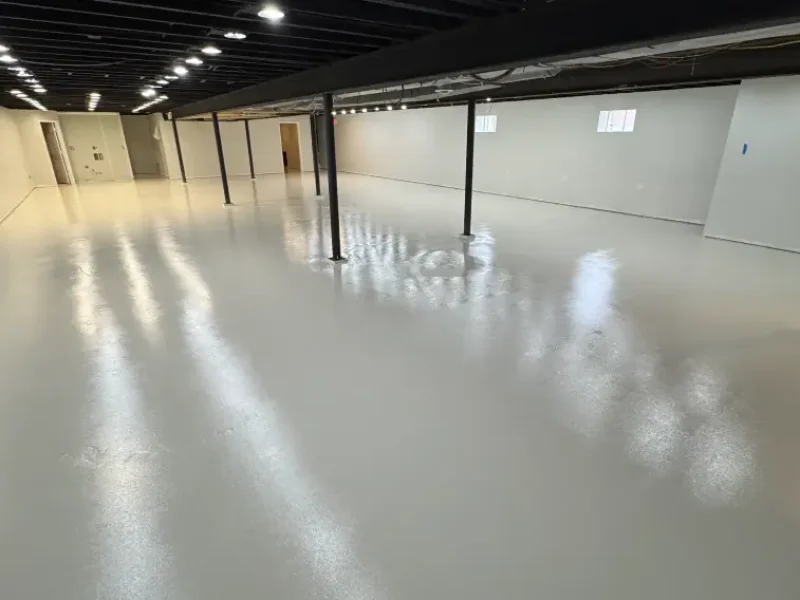
Basements in the St. Louis area can be tricky. With older foundations, fluctuating water tables, and neighborhoods near the Mississippi or Missouri rivers, moisture is a common concern for homeowners considering epoxy flooring. The short answer is that epoxy can work beautifully in basements—but only if moisture is properly evaluated and managed first.
Why Moisture Matters for Basement Epoxy
Epoxy creates a sealed surface on top of concrete, which sounds great until you realize that moisture naturally moves up through concrete slabs. This movement is called moisture vapor transmission, and when it’s high enough, it creates pressure under the coating. This pressure can lead to bubbles, delamination, or even entire sections of epoxy lifting off in sheets.
Hydrostatic pressure—water physically pushing up from below—is even worse. If your basement has a history of damp patches, efflorescence (white chalky deposits), or occasional water intrusion, coating it without addressing the source is a setup for failure.
Not every basement has a moisture problem, but St. Louis homes built before modern vapor barriers are especially vulnerable. Even newer homes can develop issues if grading has changed or gutters aren’t directing water away from the foundation.
How to Know if Your Basement is Too Damp for Epoxy
A reliable epoxy contractor will test your slab before quoting a price. Calcium chloride tests and moisture meters give objective data about vapor transmission rates. If the numbers are too high, a standard epoxy system won’t hold. In these cases, you have options: moisture-mitigating primers, specialty coatings designed for damp environments, or solving the water issue at the source before any coating goes down.
Some contractors skip testing and install anyway, hoping for the best. This approach often leads to callbacks and unhappy homeowners within the first year.
How Seal Epoxy Handles Damp Basements in St. Louis
Seal Epoxy treats moisture testing as a non-negotiable step for every basement project. The team has worked in many older St. Louis homes—especially in neighborhoods like Soulard, Tower Grove, and near the riverfront—and knows that assumptions don’t cut it.
When moisture levels are manageable, Seal Epoxy uses the right primers and sealers to handle normal vapor transmission. When levels are high, they’ll recommend addressing drainage or ventilation issues first, or they’ll specify a moisture-tolerant system designed for the conditions. It’s not about upselling; it’s about installing a floor that will still look great in five years.
If you’re unsure whether your basement is a good candidate for epoxy, Seal Epoxy provides moisture evaluations as part of their free in-home assessments throughout the St. Louis metro. You’ll get clear answers and real solutions, not just a sales pitch.
Have Any Question?
For more information about epoxy flooring systems for your garage or basement, feel free to reach out to us.