
Epoxy Floors for Showrooms, Gyms and Retail Spaces
What can damage an epoxy floor, and can it be repaired?
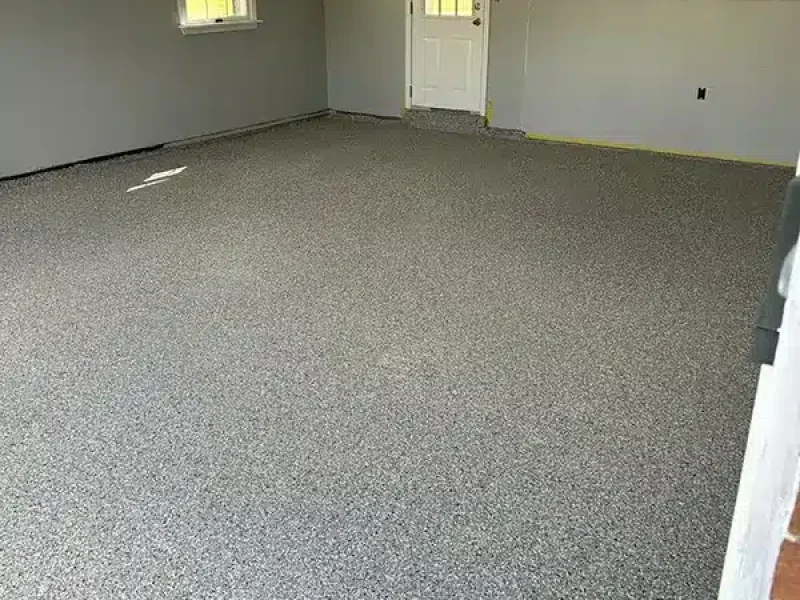
Understanding Epoxy Floor Damage and Repair in St. Louis
Epoxy flooring is one of the most durable options for St. Louis garages and basements, but it’s not invincible. Knowing what can cause damage helps you avoid problems, and understanding repair options gives you peace of mind if something does go wrong.
Common Causes of Epoxy Damage
Hot Tires
Issue: Hot tires from summer driving can soften cheap coatings and pull them up, leaving tire marks or delaminated patches.
Solution: Professional high-solids systems resist this much better.
Dropped Tools
Issue: Heavy metal items like wrenches or car jacks can chip or crack the surface.
Solution: Epoxy is hard, but impacts from pointed edges can still cause damage.
Dragging Heavy Metal Objects
Issue: Toolboxes, motorcycles on center stands, or equipment without wheels can scratch or gouge the topcoat.
Solution: Use furniture pads or plywood under heavy items to prevent damage.
Chemical Damage
Issue: Harsh solvents, strong acids, or prolonged exposure to certain cleaners can dull or discolor the surface.
Solution: Epoxy resists most common garage chemicals, but abusing it with paint thinner or oven cleaner can cause issues.
UV Exposure
Issue: Sunlight coming through open garage doors can cause some epoxy systems to yellow or fade over time.
Solution: This is mostly a cosmetic issue, not structural damage.
Can Damaged Epoxy Be Repaired?
Minor Scratches and Surface Scuffs
These are cosmetic and usually don’t affect performance. If appearance matters, a fresh topcoat can restore the glossy finish.
Small Chips or Cracks
Repair: Clean the area, fill with epoxy resin, and blend the repair into the surrounding floor. This is effective when the damage is localized and the rest of the floor is in good condition.
Delamination or Widespread Peeling
Repair: This usually requires stripping and recoating the affected area or, in severe cases, the entire floor. If the failure was caused by poor prep or moisture, those issues need to be addressed before recoating.
How Seal Epoxy Handles Repairs in St. Louis
Seal Epoxy evaluates damage before recommending a repair approach. Here’s how we handle repairs:
Small Issues: These can often be fixed quickly and affordably.
Larger Problems: Require more investigation to determine the root cause.
Because Seal Epoxy uses proper prep and professional-grade materials, damage is rare. When it does happen—usually from accidental impacts or heavy abuse—the team provides honest assessments and practical solutions.
Repair Consultations for Existing Customers
Existing Customers: You can call Seal Epoxy for repair consultations. The team will inspect the floor, explain what caused the damage, and provide options for fixing it.
For Homeowners with Older Epoxy Floors: If your epoxy floor was installed by another contractor, Seal Epoxy can assess whether repair is feasible or if a full recoat makes more sense. Sometimes, a failing floor is better off stripped and redone correctly than patched repeatedly.
Protecting Your Floor
If you’re worried about damage potential, Seal Epoxy’s free consultations include a discussion about what your floor will face and how to protect it. You’ll understand realistic durability expectations and how to handle the occasional issue if it arises.
Tags :
Share This :
Have Any Question?
For more information about epoxy flooring systems for your garage or basement, feel free to reach out to us.