
Epoxy Floors for Showrooms, Gyms and Retail Spaces
What prep steps are included in a professional epoxy installation?
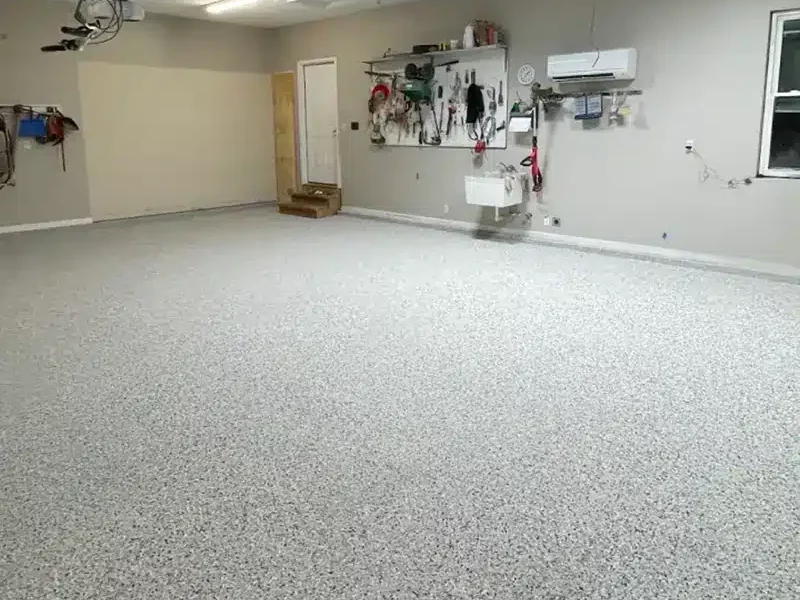
Surface Preparation: The Key to a Long-Lasting Epoxy Floor
Surface preparation is the single most important factor in whether your epoxy floor lasts two years or twenty. It’s also where budget contractors often cut corners to keep bids low. Here’s what proper prep looks like and why each step matters for St. Louis garages and basements.
Diamond Grinding: The Foundation of Adhesion
Diamond grinding uses commercial equipment with rotating diamond-impregnated heads to:
Remove contaminants
Open the concrete’s pores
Create surface profile
This mechanical abrasion gives epoxy something to grip, far more effectively than acid etching or light sanding.
Grinding also removes old coatings, oil stains, and surface laitance (a weak top layer that forms on some concrete). Without this step, even the best epoxy won’t bond properly.
Trying to skip grinding is the #1 reason DIY and low-bid jobs fail.
Seal Epoxy uses professional-grade grinders on every project. The equipment is expensive and requires skill to operate, but it’s non-negotiable for quality results.
Crack and Joint Repair
Crack Repair
Cracks in concrete need to be routed and filled before coating. If left untreated, they allow moisture to work underneath the epoxy or create weak points where the coating can bridge and crack.Seal Epoxy uses flexible polyurea or epoxy crack fillers that move slightly with the concrete, preventing the repair from becoming a failure point later.
Control Joints
Control joints—intentional seams in the slab—are evaluated case-by-case. Some can be filled, but others are better left as joints and sealed appropriately.
Thorough Cleaning
After grinding and repairs, the slab is vacuumed and cleaned to remove all dust and debris. Any remaining particles will interfere with epoxy adhesion.
Professional crews use industrial vacuums and may follow up with solvent wiping in contaminated areas.
This step may sound simple, but it’s critical. A dusty slab won’t bond properly, no matter how good the epoxy is.
Why Acid Etching Alone Isn’t Enough
Some contractors mention acid etching as if it’s equivalent to grinding. It’s not.
Acid etching opens the concrete’s surface slightly but doesn’t remove contaminants or create the deep profile epoxy needs.
It’s an outdated prep method that budget contractors use because it’s cheap and fast.
How Seal Epoxy’s Prep Sets the Standard
Seal Epoxy’s prep process is consistent across every St. Louis project.
Diamond grinding, crack repair, and thorough cleaning are standard, not optional upgrades.
The team uses commercial equipment and treats prep as the foundation of a long-lasting floor.
Homeowners often comment on how much dust and debris comes off the slab during grinding. It’s a visible reminder that surface prep matters, and that shortcuts have real consequences.
Education During In-Home Assessments
During free in-home assessments, Seal Epoxy explains each prep step and why it’s included. You’ll understand why proper preparation is the key to a successful, durable epoxy floor.
Tags :
Share This :
Have Any Question?
For more information about epoxy flooring systems for your garage or basement, feel free to reach out to us.