
Epoxy Floors for Showrooms, Gyms and Retail Spaces
What Thickness Should a Quality Epoxy Floor Be?
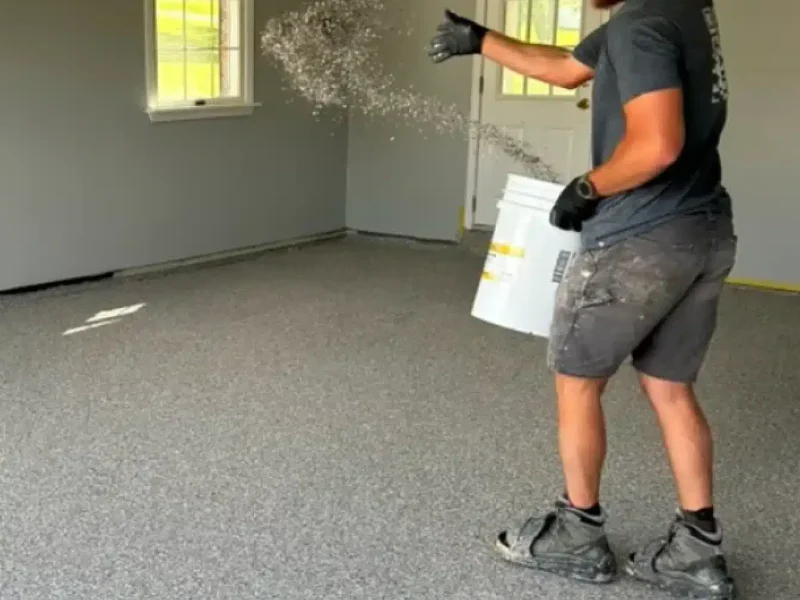
One of the technical questions St. Louis homeowners ask is how thick their epoxy floor should be. It’s a smart thing to consider because thickness does matter—but not in the way most people think. A thicker coating isn’t automatically better if the prep work underneath is poor.
Understanding Mil Thickness
Epoxy Thickness: Epoxy thickness is measured in mils (one mil equals one-thousandth of an inch). A typical residential garage floor system might be anywhere from 10 to 40 mils thick when fully cured, depending on how many coats are applied and what products are used.
DIY Kits: Often result in coatings under 10 mils because the low-solids products thin out significantly as solvents evaporate.
Professional High-Solids Systems: Build more thickness per coat because there’s more actual resin staying on the floor.
Key Point
A 30-mil epoxy coating on poorly prepped concrete will fail faster than a 15-mil coating on properly ground, profiled, and cleaned concrete. Thickness helps with durability and chemical resistance, but only if the bond to the slab is solid.
How Use Affects Thickness Requirements
Standard Garage for Parking and Storage: Doesn’t need as much thickness.
Home Workshop or Space with Heavy Equipment: More demanding environments benefit from thicker systems with additional impact resistance.
Some contractors push thick, multi-layer builds as a selling point, but unnecessary thickness just adds cost without real benefit. The right approach is matching the system to how you’ll use the space.
How Seal Epoxy Specifies Systems in St. Louis
Seal Epoxy starts every job by evaluating slab condition and asking how the garage or basement will be used. For example:
A garage for two sedans and seasonal storage gets a durable but straightforward system.
A workshop or space with heavy equipment gets a more robust build with additional layers.
The team also considers concrete condition. Older slabs with minor spalling or surface damage might benefit from a slightly thicker system to hide imperfections and add impact resistance. Newer slabs in good shape don’t need as much.
What matters more than thickness alone is proper prep, quality products, and the right number of coats for your situation. Seal Epoxy uses professional-grade, high-solids materials that build appropriate thickness without the waste and cost of unnecessary layers.
Tags :
Share This :
Have Any Question?
For more information about epoxy flooring systems for your garage or basement, feel free to reach out to us.