
Epoxy Floors for Showrooms, Gyms and Retail Spaces
Warehouse Epoxy Flooring That Handles Heavy Traffic
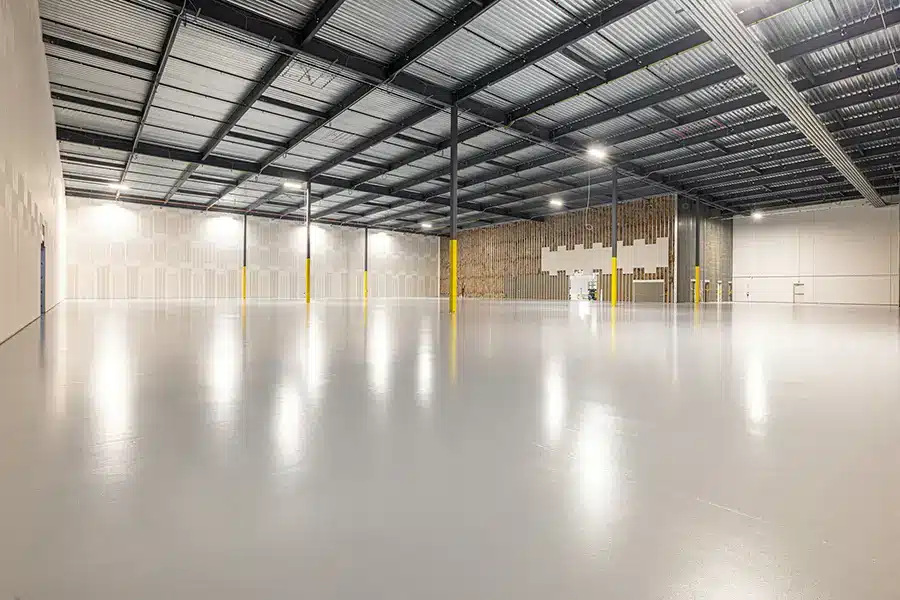
Warehouse epoxy flooring turns a dusty, crumbling slab into a sealed, easy-to-clean surface that stands up to daily forklift and pallet traffic. A warehouse floor takes more punishment than almost any other floor in a building, and bare or poorly coated concrete is usually the first thing to fail.
What a warehouse floor has to survive
Bare concrete is porous. It dusts, stains and chips under load, and that dust ends up on stock, equipment and lungs. A properly specified commercial epoxy system seals the surface and bonds with it, so the floor can handle:
- Forklift and pallet jack traffic. Hard wheels concentrate weight on a small contact patch and wear through thin coatings quickly.
- Dropped loads and impact. Pallets, tools and equipment chip weak coatings and spall unprotected concrete edges.
- Spills and chemicals. Oils, cleaners, battery acid and solvents soak into raw concrete but can be wiped off a sealed epoxy surface.
- Constant cleaning. A seamless, non-porous finish is faster to sweep, scrub and auto-scrub than bare slab.
The key word is specified. A thin garage-grade coat will not last in a distribution centre. Warehouse floors usually call for a thicker, higher-solids system installed over a properly prepared and ground slab.
Slip and impact resistance
A durable floor is no use if people slip on it. Smooth, glossy epoxy can be slick when wet, so warehouse systems are built with traction in mind. Anti-slip aggregate is broadcast into the coating or mixed into the topcoat, giving the surface grip without making it impossible to clean. The right texture depends on how the space is used: a dry storage aisle needs less than a loading dock where wet tyres and spills are routine.
Impact resistance comes from the system build rather than the colour coat. A typical heavy-duty system includes:
- A ground, profiled slab, so the coating can bond mechanically.
- A primer that penetrates and seals the concrete.
- A thicker body coat, often with aggregate, for strength and abrasion resistance.
- A chemical- and abrasion-resistant topcoat (see the difference between regular epoxy, high-solids and polyaspartic) for cleaning and wear.
Cracks and joints should be repaired or properly detailed before coating. Skipping this step is a common reason floors fail early.
Line striping and safety zones
Epoxy is also a way to organise the building. Coloured lines and zones are applied as part of the floor, not stuck on top, so they last far longer than tape or paint on bare concrete. Common uses include:
- Forklift lanes and traffic direction arrows
- Pedestrian walkways kept separate from vehicle routes
- Loading bay, staging and no-parking zones
- Racking footprints, hazard areas and exit routes
Clear, durable markings support safer movement and make audits easier. Using standard safety colours that your team already recognises keeps things simple. Mark the layout before the coating goes down so the lines can be integrated into the finished floor.
Planning for downtime
For a working warehouse, the question is rarely “can we coat it?” but “how do we keep operating while we do?”. Good planning keeps disruption small:
- Phase the work. Coat one section at a time so stock and operations can shift between zones.
- Choose the right cure speed. Fast-cure systems can return a floor to service sooner than standard epoxy. Ask your installer about foot and forklift traffic timelines for the specific product.
- Schedule around your calendar. Weekends, shutdowns and slow seasons are the usual windows.
- Clear the area and prepare early. Moving racking and stock before the crew arrives avoids delays.
- Plan ventilation and access. Coating and grinding need airflow and clean working areas.
A short site visit lets the installer measure the slab, test for moisture, check existing coatings and build a realistic schedule.
Talk to Seal Epoxy about your warehouse floor
Every slab is different, and the right system depends on your traffic, chemicals and schedule. Contact Seal Epoxy for a warehouse floor assessment and a clear quote for a commercial epoxy system built for your operation.
Tags :
Share This :
Have Any Question?
For more information about epoxy flooring systems for your garage or basement, feel free to reach out to us.