
Epoxy Floors for Showrooms, Gyms and Retail Spaces
How Does Epoxy Cost and Perform Compared to Garage Floor Tiles?
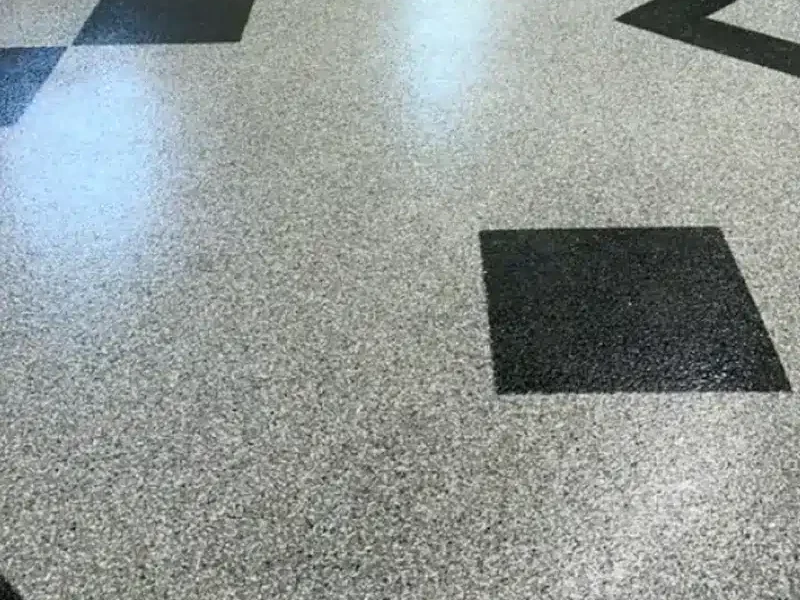
Interlocking garage floor tiles have become popular over the past decade, and it’s easy to see why. They look sharp, install quickly, and don’t require any curing time. But when St. Louis homeowners compare tiles to professionally installed epoxy over the long term, epoxy wins on durability, maintenance, and total cost of ownership.
How Tiles and Epoxy Compare Upfront
Garage Tiles:
Faster installation, usually a DIY weekend project with no special tools.
No surface prep beyond sweeping the floor.
No odor or downtime.
Quality tiles can look great, especially modular systems with custom colors and patterns.
Professional Epoxy:
Costs more upfront and requires several days from prep to full cure.
The installation process involves grinding, coating, and waiting, meaning you’ll need to coordinate vehicle parking and plan around the timeline.
Where the Differences Show Over Time
Tiles:
Sit on top of the concrete without bonding to it, causing several long-term issues.
Individual tiles can shift, crack, or pop loose under heavy loads or repeated traffic.
Seams between tiles trap dirt, moisture, and spilled fluids, making them harder to clean. In St. Louis garages where melting snow and road salt create standing water, moisture gets underneath tiles, leading to mold or concrete damage.
Tiles expand and contract with temperature changes, which can cause them to buckle or create gaps between sections due to the significant thermal movement in St. Louis.
Epoxy:
Once cured, it becomes part of the slab, forming a seamless surface with no gaps for dirt or moisture to hide.
Doesn’t shift or crack under vehicle weight and handles temperature swings without movement.
Cleaning is simple—just sweeping or mopping with no need to scrub between seams.
Maintenance and Replacement
Tiles:
When tiles fail, entire sections usually need replacement.
Matching discontinued colors or styles can be difficult.
Moisture damage underneath might require mold remediation and concrete repairs before reinstalling.
Epoxy:
Maintenance is minimal—regular cleaning and occasional reapplication of a topcoat if needed.
Spot repairs are possible.
A well-installed epoxy floor lasts 10-15 years or more without major intervention.
Why Seal Epoxy Replaces Tile Systems Around St. Louis
Seal Epoxy frequently works with homeowners who installed tiles and regretted it within a few years. The most common complaints are movement, moisture trapped underneath, and the difficulty of keeping seams clean. In several cases, tiles were hiding concrete damage or moisture issues that got worse because the tiles prevented proper evaluation.
When Seal Epoxy removes tiles, they find the same concrete problems that should have been addressed before any floor covering went down. The difference is that epoxy is installed correctly the first time, with proper prep, moisture testing, and a coating system designed for the real conditions in St. Louis garages.
If you’re weighing tiles against epoxy, Seal Epoxy’s free consultations include an honest comparison of both options and a look at what your specific slab needs to perform well long-term.
Tags :
Share This :
Have Any Question?
For more information about epoxy flooring systems for your garage or basement, feel free to reach out to us.