
Epoxy Floors for Showrooms, Gyms and Retail Spaces
Epoxy Flooring for Basements in Missouri Homes
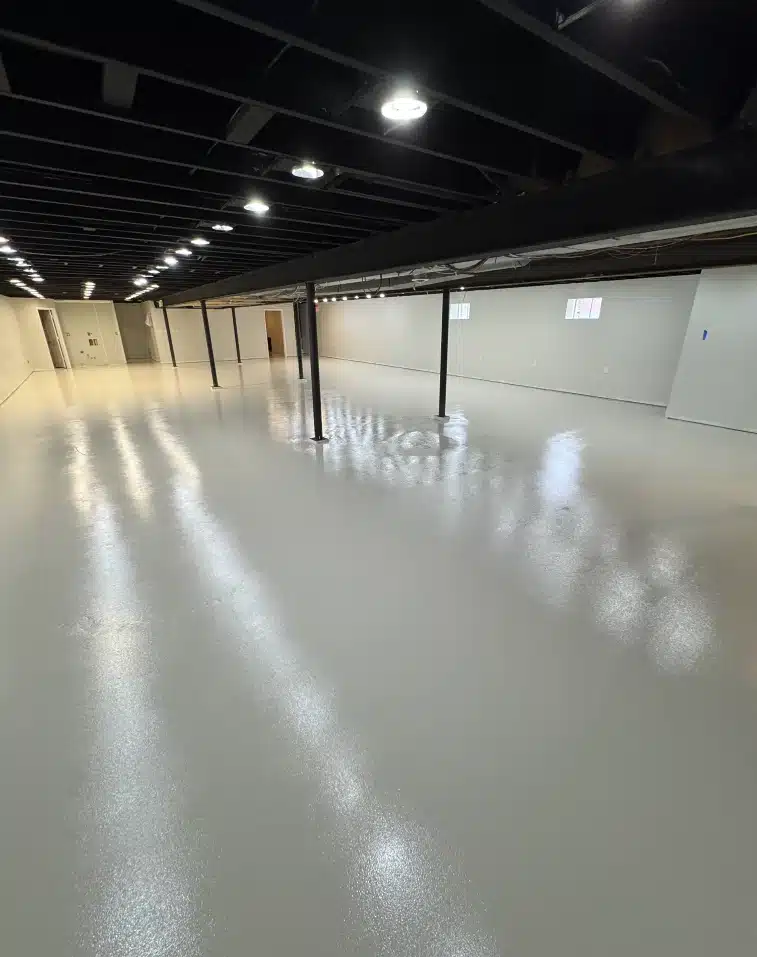
A bare concrete basement can feel unfinished, even when the rest of your home looks exactly how you want it. Whether you use the space for storage, laundry, hobbies or family time, the floor makes a noticeable difference.
Basement epoxy flooring creates a durable, easy-to-clean surface with colors and finishes that suit your space. However, a successful installation starts with the concrete beneath it. Moisture, existing coatings and slab condition all need attention before you choose a finish.
For Missouri homeowners considering an epoxy basement floor, here is what to evaluate, what your options are and what to expect during installation.
Is Epoxy Flooring Right for Your Basement?
Epoxy can be a practical choice for a basement with sound concrete and moisture conditions suitable for the selected coating system.
It is worth considering for:
- Laundry and utility rooms, where an easy-to-clean surface is useful.
- Storage areas, where a coated floor can make routine cleaning simpler.
- Workshops and hobby rooms, where durability matters.
- Finished basements, where decorative finishes can complement furniture and lighting.
There are trade-offs. Epoxy follows the hardness of the concrete underneath, so it does not provide the cushioning of carpet or resilient flooring. The floor can also feel cool underfoot. For a family room, consider how rugs, seating and heating will make the space comfortable.
The right choice depends on how you use your basement, the condition of the slab and the finish you prefer.
Check Moisture Before Choosing a Basement Floor Coating
A concrete floor that looks dry may still contain moisture that affects coating adhesion. Before installation, the contractor should assess the slab and compare the test results with the coating manufacturer’s requirements.
Mention any history of:
- Water entering after heavy rain.
- Recurring damp patches.
- White, chalky deposits on the concrete.
- Peeling paint or previous coating failures.
Excess moisture can contribute to blistering or loss of adhesion. Depending on the findings, the project may need an appropriate moisture-control system or work to address the source before coating begins.
An ordinary decorative epoxy coating is not a solution for basement leaks or flooding.
For a closer look at this issue, read our guide to epoxy flooring in damp basements.
For more detail, Sherwin-Williams explains how moisture can cause blistering in concrete floor coatings and why choosing the right system matters.
Choose a Finish That Fits the Space
Your basement floor should suit both the appearance you want and the way you use the room.
Solid Color
A solid-color finish offers a simple, consistent appearance. Neutral shades can work well in utility rooms, workshops and basements where you want the floor to complement the rest of the space.
Ask to see samples under lighting similar to your basement’s lighting before deciding.
Decorative Flake
Flake finishes combine colored chips with a coating system to create a patterned surface. They offer a range of color blends and can make everyday dust and small marks less noticeable.
Texture depends on the complete system, including its topcoat. Discuss the balance between traction and easy cleaning rather than assuming every flake floor has the same surface.
Metallic
Metallic finishes create flowing patterns and variations in color. They can suit finished basements where the floor is a prominent design feature.
Each installation has its own appearance. Review completed examples and ask what variation to expect rather than relying on a small sample alone.
Whatever finish you choose, discuss wet-area traction, especially near laundry equipment, sinks or exterior entrances.
What Affects Basement Epoxy Flooring Cost?
The floor area is only part of the price. Two basements of similar size can require very different preparation.
Important cost factors include:
- Concrete condition: cracks, damaged areas and uneven surfaces may need additional work.
- Existing materials: removing paint, adhesive or old coatings adds preparation.
- Moisture findings: some slabs need a compatible moisture-control system.
- Finish selection: decorative effects and additional layers affect labor and materials.
- Access: stairs, equipment access and obstacles can influence the installation process.
Ask for a quote that explains preparation, the coating system, decorative finish and any additional work. A price per square foot is more useful when you know exactly what it includes.
How Basement Epoxy Flooring Is Installed
Professional installation involves more than rolling a coating onto concrete.
1. Inspect and Plan
The contractor assesses the slab, moisture conditions, access and intended use. This helps determine the preparation and coating system the basement needs.
2. Clear the Work Area
Move furniture, stored items and other obstacles before work begins. Discuss fixed equipment, floor drains and access to utilities so the installation plan accounts for them.
3. Prepare the Concrete
Preparation may include mechanical grinding, removing incompatible coatings, repairing suitable defects and cleaning the surface. Cracks and movement joints need an appropriate treatment plan.
Our guide explains what professional epoxy floor preparation includes.
4. Apply the Selected System
The installer applies the specified layers, which may include a primer, epoxy coating, decorative material and protective topcoat. The exact sequence depends on the system.
5. Allow the Floor to Cure
Installation time and return-to-use time are different. Ask when you can walk on the floor, replace furniture and resume normal use.
Follow the instructions for the products installed rather than relying on a universal timeline. Read more about epoxy installation and curing.
Plan for Ventilation and Household Access
Basement work can affect access to laundry equipment, storage and other frequently used areas.
Before installation, discuss ventilation, dust control and how the work area will be separated from occupied rooms. Product instructions should guide ventilation and re-entry arrangements.
Bring up these questions during the estimate so you can plan around the work. Our article on odors during epoxy installation covers additional considerations.
Caring for Your Finished Basement Floor
Follow the installer’s maintenance instructions for your particular finish.
Routine care generally includes removing loose dirt, cleaning spills promptly and using an approved cleaner. Protect the surface when moving heavy furniture or equipment, and avoid dragging sharp objects across it.
Inspect the floor occasionally. New cracks, lifting edges or recurring dampness deserve attention rather than being covered with another layer.
See our guide to cleaning and maintaining an epoxy floor.
Frequently Asked Questions
Can epoxy be installed over a painted basement floor?
Possibly, but the existing paint must be evaluated. Weak or incompatible coatings may need removal. The preparation requirements depend on the concrete and selected system.
Will epoxy make my basement waterproof?
A decorative floor coating does not resolve foundation leaks, drainage problems or flooding. Assess and address water-entry problems before choosing a floor finish.
Can I use epoxy in a finished basement?
Yes, where slab conditions suit the system. Consider appearance, traction, comfort underfoot and ventilation when planning a living space.
How soon can furniture go back?
That depends on the installed products and conditions. Ask for written return-to-use instructions, including when the floor can accept heavy furniture and rugs.
Discuss Your Basement Flooring With Seal Epoxy
A successful basement floor starts with understanding the space, evaluating the concrete and selecting a suitable finish.
Seal Epoxy offers residential epoxy flooring services from Washington, Missouri. If you are planning a basement upgrade, request a free quote to discuss your floor, finish preferences and installation needs.
Tags :
Share This :
Have Any Question?
For more information about epoxy flooring systems for your garage or basement, feel free to reach out to us.