
Epoxy Floors for Showrooms, Gyms and Retail Spaces
What questions should I ask an epoxy contractor?
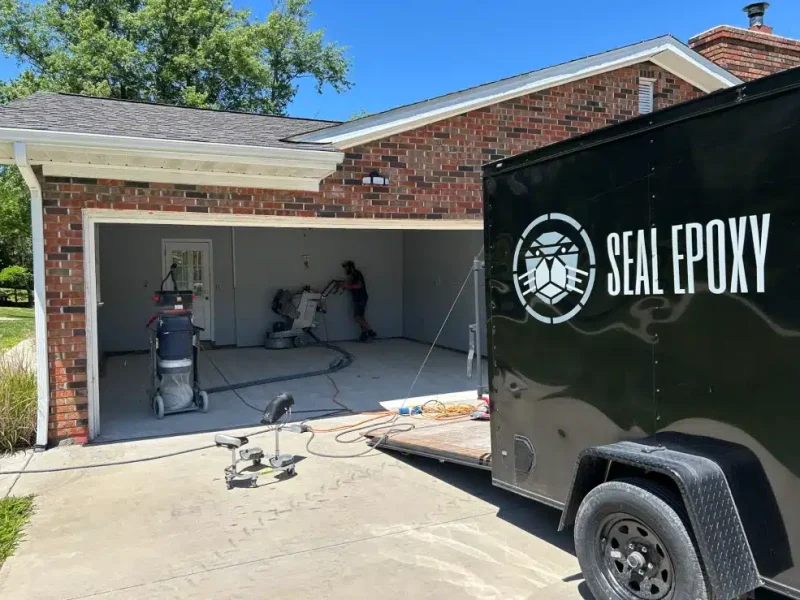
Not All Epoxy Contractors in St. Louis Are the Same: How to Vet Your Contractor
The cheapest bid often comes with hidden compromises. Knowing the right questions to ask helps you vet contractors and avoid those who cut corners. Here’s a checklist to use when comparing quotes.
Surface Preparation Questions
What specific prep steps are included?
Diamond grinding is the gold standard—it removes contaminants, creates surface profile, and ensures proper epoxy adhesion. Acid etching alone is usually inadequate for residential garages. If the contractor mentions pressure washing or light sanding, consider that a red flag.How are cracks repaired?
Ask how cracks are sealed and what products are used. Proper crack filling prevents epoxy from bridging over voids and failing prematurely.
Materials and Product Questions
What brand and type of epoxy will be used?
A reputable contractor should be able to tell you the solids content (aim for 90-100% solids) and explain why they’ve chosen that system for your slab and use case.How many coats are included, and what’s the expected total thickness?
Beware of vague answers or contractors who won’t provide product data sheets.
Crew and Experience Questions
How long has the company been doing residential epoxy?
Ask for references and photos of completed St. Louis projects. Look for consistency in prep, application, and cleanup across their portfolio.Will the same crew handle your job, or is work subcontracted?
Subcontracting isn’t necessarily bad, but you want to know who’s accountable for your project.
Warranty and Follow-Up Questions
What’s covered under the warranty, and for how long?
A solid contractor offers at least a multi-year warranty on materials and workmanship. Be sure to read the fine print—some warranties exclude common issues like hot tire pickup or require unrealistic maintenance.How are warranty claims handled?
Will the contractor come back to assess and fix problems, or will you be navigating a complicated claims process?
How Seal Epoxy Answers These Questions
Seal Epoxy treats these questions as opportunities to educate, not obstacles. Here’s how they address these common concerns:
Diamond Grinding Process:
Seal Epoxy explains their diamond grinding process in detail, ensuring the best surface preparation for epoxy adhesion.Product Selection:
The team walks through the specific products they use for St. Louis conditions, tailored to meet your needs.In-House Crews:
Seal Epoxy’s crews are trained in-house, not subcontracted, so you’re working with the same team from estimate to completion.Comprehensive Warranty:
The warranty is straightforward and covers the work comprehensively because the systems are installed correctly from the start.
Why Use Seal Epoxy as Your Benchmark?
Using Seal Epoxy as a benchmark when comparing bids helps you identify which contractors are serious about quality and which are just trying to be the lowest number on paper.
Transparent Process:
During free in-home consultations, Seal Epoxy answers every question transparently and explains what separates a professional installation from a budget job.Evaluating Contractors:
If a contractor gets defensive or vague when you ask these questions, that’s useful information. The right contractor welcomes scrutiny because they know their process stands up to it.
Tags :
Share This :
Have Any Question?
For more information about epoxy flooring systems for your garage or basement, feel free to reach out to us.